
Best Cannabis Seeds for Beginners: Traits That Make a Strain Eas
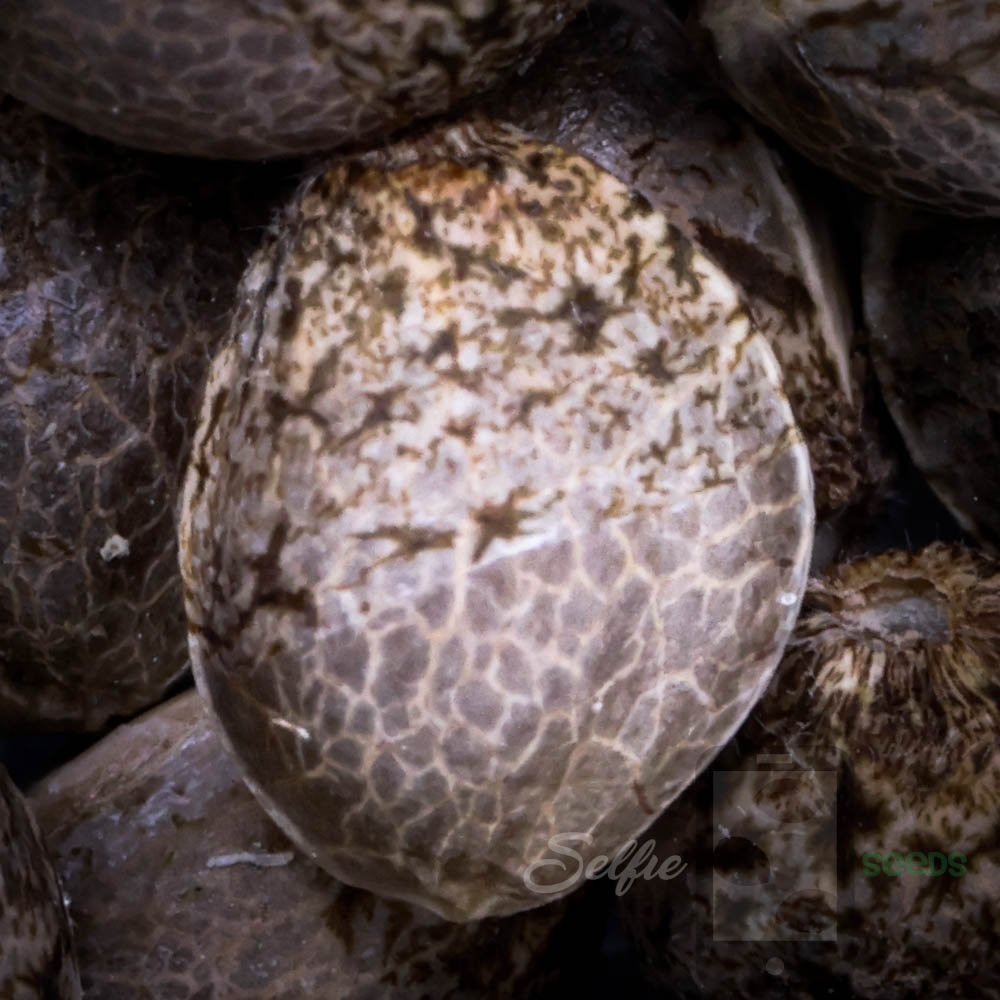
The best cannabis seeds for beginners are usually the seeds with the clearest, most useful grow record—not simply the biggest THC claim or the most recognizable name. For a first run, prioritize plants described with practical details: how fast they establish, how much they stretch, whether their branches hold flowers well, and whether they need unusually precise feeding.
There is no strain that is effortless in every room, tent, medium, or climate. A cultivar that is easy for one grower can be demanding under different light intensity, root-zone conditions, training, or flowering time. The useful question is: does the documented behavior fit your available space and your margin for mistakes?
Five traits that matter more than a strain name
- Early vigor. Look for a plant that establishes well after germination and transplanting. Vigor does not guarantee a problem-free crop, but a slow or fragile start gives a new grower less room to learn.
- Strong, workable structure. Sturdy stems and branch spacing make tying down, supporting flowers, and maintaining airflow simpler. A plant that can be trained without excessive breakage is generally easier to manage in a small indoor area.
- Manageable stretch. Seed descriptions should say something meaningful about height or flowering behavior. For a short tent, an extremely vertical plant can become difficult even if its flowers are excellent.
- Reasonable feeding behavior. “Easy” does not mean a plant needs no nutrition. It means the breeder or grower has provided enough detail that you can avoid treating it like a mystery plant—for example, noting lower nitrogen demand or an earlier transition to bloom.
- A documented parent plant and selection history. A seed page should identify the parent or parents and explain why the plant was selected. That is more actionable than broad labels such as “beginner strain” or “elite genetics.”
What our strain-hunt notes can—and cannot—tell a beginner
In HWGrow’s documented 2022 strain hunt, multiple seed-grown cultivars were taken from seed to harvest in the same overall run. The grower’s stated ranking criteria were frost/THC, yield, structure, foliage, and ease of growing. That side-by-side format is useful because it makes practical differences in structure and management more visible than growing one cultivar alone. [1]
That is still an owner grow journal, not a controlled cultivar trial. It supports a practical observation—some plants required less correction in that particular setup—but it does not prove that the same cultivar will behave identically in every beginner’s garden. Use this kind of record as decision support, not a universal guarantee.
S1 seeds: useful for selection, but not a clone in seed form
S1 (selfed) seeds come from a selected plant being pollinated with pollen derived from that same plant. For a beginner, that can be attractive when the breeder has thoroughly documented the original plant, because the seed line begins with one known selection rather than two unrelated parents.
However, do not treat “S1” as a promise that every seed will be identical to the mother plant. The Blueberry Sugar product page describes its Selfie Seeds™ as highly consistent and says variance is low compared with crosses. That is the breeder’s/owner’s product position and may be a reasonable expectation for a carefully chosen parent, but it remains a claim about this line rather than a guarantee for every seed. [2]
Published cannabis research provides an important counterpoint: selfed progeny can still segregate for traits carried in a heterozygous parent. In one hemp study, selfed offspring were smaller, lower yielding, and more variable than the outcrossed progeny tested; the authors wrote that “Selfed progeny were variegated and highly variable for total dry weight and floral dry weight.” [3] That study was conducted in hemp and does not test Blueberry Sugar or every S1 line. Still, it is a good reason for beginners to view S1 as a breeding format—not a substitute for documented germination, plant photos, grow notes, and realistic expectations.
A documented example: Blueberry Sugar
Blueberry Sugar is a feminized S1 described as Grape Cream 2.1 × Blueberry Frosting, selected from a Blockhead Buds cut. The product documentation describes dense, heavily frosted flowers, a blueberry-forward profile without the “soapy” note the owner dislikes in some blueberry cultivars, relatively low nitrogen demand, and a possible earlier bloom transition when following the owner’s stated schedule. [2]
For a beginner, the practical value is not the flavor description or frost claim by itself. It is the presence of concrete management notes. If you choose this line, treat “does not need much nitrogen” as a starting observation from the owner—not a license to underfeed every plant. Watch the plant, make small changes, and keep notes.
Photoperiod or autoflower for a first grow?
Neither format is automatically beginner-proof. A photoperiod plant gives you control over when flowering begins, which can be helpful when a plant needs more vegetative time to recover from topping, transplanting, or an early mistake. An autoflower follows its own flowering timetable, so the grower has less time to correct a slow start. Choose the format that fits your schedule, available height, and willingness to train—not a blanket claim that one category is always easier.
What beginners should avoid
- Choosing by an advertised THC percentage alone, especially when the listing does not explain how the plant grows.
- Selecting a very stretchy cultivar for a tent with limited headroom.
- Running many unrelated cultivars on a first grow and expecting identical feeding or canopy behavior.
- Assuming a higher seed price proves easier cultivation.
- Reading “S1,” “feminized,” or “stable” as a guarantee that no variation or plant-to-plant observation will be needed.
Our recommendation: buy documentation, not hype
Start with a breeder or seller that identifies the parent plant, describes structure and feeding behavior, and is clear about whether the seeds are selfed or crossed. Browse the full cannabis seed collection or the dedicated beginner guide, then match the line to your tent height, grow style, and available time.
The best beginner seed is not necessarily the loudest or strongest option. It is the one with a credible record of behavior that gives you a workable plan before the seed ever goes into the medium.
Sources & References
Source hierarchy prioritizes documented HWGrow/EVYGrows/SelfieSeeds experience. External evidence is supplemental where useful, with counterarguments included when relevant.
- [Owner Journal / First-Hand Record] Best Strain I Ever Grew – Strain Hunt 2022 – 7 Weed Strains Seed to Harvest
HowWeedGrow · HowWeedGrow · 2022
Quoted source: “I grew 8 different strains from seed to harvest.”
Supports / context: Supports the article's characterization of the owner’s side-by-side strain-hunt experience and stated selection criteria, including ease of growing. - [HWGrow / Owner Source] Blueberry Sugar - Blockhead Selfie Seeds™
HowWeedGrow / Selfie Seeds™ · Selfie Seeds™ · n.d.
Quoted source: “Does not need much nitrogen.”
Supports / context: Supports the documented lineage, selection account, product-specific growth notes, and the seller’s stated position on expected consistency in this S1 line. - [Peer-Reviewed Journal] Comparing Genotypic and Phenotypic Variation of Selfed and Outcrossed Progeny of Hemp
Lauren E. Kurtz, Jonathan D. Mahoney, Mark H. Brand, and Jessica D. Lubell-Brand · HortScience · 2020
Quoted source: “Selfed progeny were variegated and highly variable for total dry weight and floral dry weight.”
Supports / context: Provides a crop-specific scientific caveat that selfing does not guarantee uniform progeny and may expose variation or inbreeding-related performance differences; the study was performed in hemp, not the specific retail line discussed.
Related seeds for sale
Space Juice x GxS(Double Grape x Sweet Slurry) · GUTSO - Strawberry Banana x White Wedding · SAND BERRY - (SB x WW) x Strawberry Sugar · Blueberry Sugar - Blockhead Selfie Seeds™
Related Products


Space Juice x GxS(Double Grape x Sweet Slurry)
$60.00 Ex Tax: $60.00


GUTSO - Strawberry Banana x White Wedding
$60.00 Ex Tax: $60.00


SAND BERRY - (SB x WW) x Strawberry Sugar
$75.00 Ex Tax: $75.00
Blueberry Sugar - Blockhead Selfie Seeds™
$100.00 Ex Tax: $100.00