
Feminized Cannabis Seeds vs Regular Seeds: Which Type Fits Your
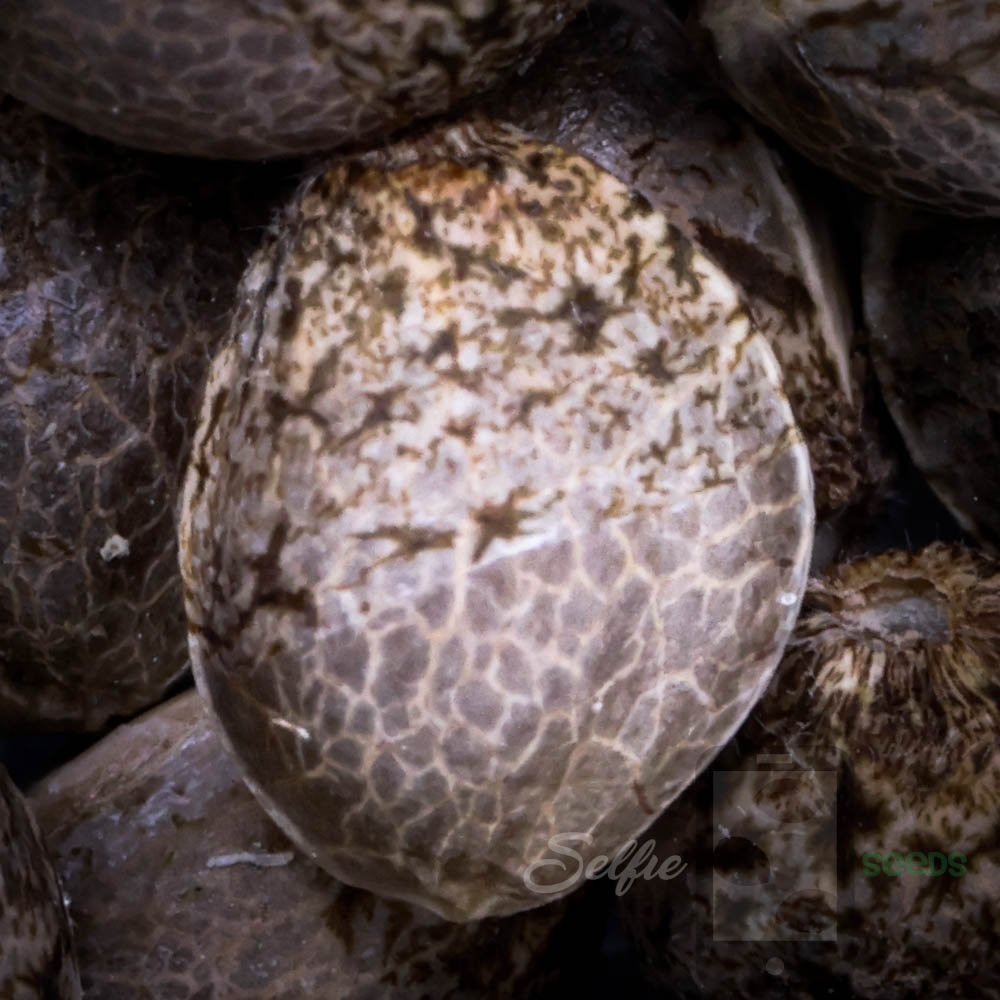
Feminized cannabis seeds are bred from female plants and are intended to produce female offspring. Regular cannabis seeds come from a conventional male-female cross, so a grower must identify and separate male plants when the goal is unseeded female flower. The best choice is less about which seed type is “better” and more about whether you are growing flower, selecting breeding males, or trying to revisit one standout female.
Quick answer: which seed type fits your goal?
- Choose feminized seeds if you want to use a limited plant count or indoor canopy for female flower.
- Choose regular seeds if your breeding plan requires male plants and male selection.
- Choose S1 seeds if your interest is a seed line built around one documented female phenotype rather than a two-parent cross.
Regular cannabis seeds
Regular seeds are made with pollen from a male plant and flowers from a female plant. Their offspring can be male or female, which makes regular seed useful when a breeder wants to evaluate males alongside females and make conventional crosses.
For a flower-focused home grow, regular seed adds a planning step: sex plants early enough to prevent unwanted pollination. That is not a drawback for every project; it is simply a different workflow. If access to male pollen is part of the goal, regular seed remains the direct option.
What feminized cannabis seeds are
Feminized seed is made when pollen from a genetically female plant fertilizes a female plant. In cannabis breeding, female plants can be induced to form pollen-bearing flowers; silver thiosulfate (STS) is one studied method for doing this. Because female-derived pollen does not contribute a Y chromosome, female-to-female pairings are expected to yield XX offspring. [3]
That chromosome logic explains why feminized seed is useful, but it should not be turned into a blanket promise about every trait. Sex expression in cannabis is biologically plastic, and a feminized label alone does not establish how a particular line will perform, how uniform it will be, or how it will respond to a specific environment.
Feminized cross vs. S1: the distinction matters
“Feminized” describes the type of pollen used. It does not tell you whether the seed is selfed or crossed.
| Seed type | Parent arrangement | Best fit |
|---|---|---|
| Regular | Male pollen donor + female receiver | Projects that require male plants and conventional breeding choices |
| Feminized cross | Female-derived pollen donor + a different female receiver | Combining traits selected from two female parents |
| S1 / selfed seed | Female-derived pollen returned to the same selected plant or its clone | Exploring and preserving a line centered on one selected female |
An S1 is therefore a type of feminized seed, while a feminized cross uses two distinct female selections. Both can be valuable; they answer different breeding questions.
What an S1 can—and cannot—preserve
At Selfie Seeds™, we use “True Selfies” for selfed seed made around a documented selected plant, with the parent phenotype, lineage, grow observations, and breeding history presented as part of the listing. That documentation is useful because it tells the grower which plant was selected—not just a broad strain name. [1]
In practical grower terms, an S1 can be a more focused way to revisit the characteristics that made a mother plant worth keeping. But “closest thing to a clone in seed form” should be understood as a breeding goal and observed similarity, not literal genetic identity. A clone is genetically the same plant; a seed is produced through sexual reproduction and can segregate traits that were hidden in the parent.
Research supports both sides of that practical picture. Selfing can reduce variation for some measured characteristics: one cannabis study found less variation in seed shape among self-pollinated seed than among crosses. [4] Yet another study found extensive variation in growth, development, and reproductive traits within an S1 hemp population. [5] In other words, an S1 may be more focused than a broad cross, but it is not a guarantee that every seedling will reproduce the mother plant exactly.
Which should a home grower choose?
Choose feminized cannabis seeds for straightforward flower growing. If you do not need male plants, feminized seed can make a small tent, legal plant limit, or fixed canopy easier to plan. You can devote your available space to female plants rather than germinating extra plants to locate females.
Choose regular seeds for conventional breeding. Regular seed is appropriate when selecting male plants is an intentional part of the project. It gives a breeder access to male and female expressions from the line, rather than limiting the project to female-derived pollen.
Choose S1 seed when the selected mother is the point. If you want a seed line centered on one specific, documented female, consider S1 cannabis seeds. Expect family resemblance and the possibility of useful variation—not a guaranteed clone replacement.
Read the parent information, not just the seed label
The word “feminized” is only the start. Before choosing a pack, look for:
- the flower receiver and pollen donor;
- whether the release is an S1 or a feminized cross;
- the selected parent’s lineage and selection reason;
- parent photographs and documented grow observations; and
- clear notes on any known variation or traits the breeder is still evaluating.
That level of disclosure lets you choose seed based on the actual breeding decision behind it. HWGrow’s linked Sweet Slurple project is presented as a breed-to-harvest journal, illustrating why parent selection and documented breeding work are more useful than a label alone. [2]
Bottom line
For most home growers focused on female flower, feminized cannabis seeds are the practical default. Choose regular seed when male selection is part of the breeding plan. Choose an S1 when you want seed made around one particular female selection—and evaluate it as a related seed family, not as a clone in a package.
Sources & References
Source hierarchy prioritizes documented HWGrow/EVYGrows/SelfieSeeds experience. External evidence is supplemental where useful, with counterarguments included when relevant.
- [HWGrow / Owner Source] True Selfies
Selfie Seeds™ · Selfie Seeds™ · n.d.
Quoted source: “These listings focus on the exact parent phenotype, lineage, grow observations and breeding history.”
Supports / context: Selfie Seeds™’ description of its S1 offerings and its emphasis on documenting the selected parent phenotype, lineage, and grow history. - [Owner Journal / First-Hand Record] BREED to HARVEST – A Breeder’s Grow Journal – SWEET SLURPLE Selfie Seeds™
HowWeedGrow · HowWeedGrow · n.d.
Quoted source: “BREED to HARVEST – A Breeder’s Grow Journal”
Supports / context: The statement that the linked HWGrow resource is framed as a documented breed-to-harvest journal. Detailed journal entries were access-restricted at review. - [Peer-Reviewed Journal] A Novel Method for Stimulating Cannabis sativa L. Male Flowers from Female Plants
Luke C. Owen, David H. Suchoff, Hsuan Chen · Plants · 2023
Quoted source: “STS ... is applied to female plants as an ethylene inhibitor to induce male flowers.”
Supports / context: The explanation that STS is a studied method used to induce pollen-bearing male flowers on female cannabis plants for feminized seed production. - [Peer-Reviewed Journal] Self-pollinated cannabis seeds lead to less variation in shape: a technological approach of potential commercial interest
Francisco Fernandez Torne, Yanina L. Idaszkin, Gregorio Bigatti, Pablo Navarro, Rolando González-José, Federico Márquez · BMC Plant Biology · 2026
Quoted source: “These seeds exhibit the least morphological variation.”
Supports / context: The limited claim that self-pollination reduced variation in the study’s measured seed-shape characteristics; it does not establish complete whole-plant uniformity. - [Peer-Reviewed Journal] Genome-specific association study (GSAS) for exploration of variability in hemp (Cannabis sativa)
Nina Trubanová, Sachiko Isobe, Kenta Shirasawa, Akiko Watanabe, George Kelesidis, Rainer Melzer, Susanne Schilling · Scientific Reports · 2025
Quoted source: “The S1 population shows extensive variability in plant growth, development, and reproductive patterns.”
Supports / context: The counterpoint that offspring from a single self-pollinated cannabis plant can still vary substantially in whole-plant traits.
Related seeds for sale
Space Juice x GxS(Double Grape x Sweet Slurry) · Space Juice x Caramel Apple Gelato · Space Juice x Sweet Slurry · White Sativa Selfie Seeds™
Related Products


Space Juice x GxS(Double Grape x Sweet Slurry)
$60.00 Ex Tax: $60.00


Space Juice x Caramel Apple Gelato
$40.00 Ex Tax: $40.00


Space Juice x Sweet Slurry
$50.00 Ex Tax: $50.00


White Sativa Selfie Seeds™
$75.00 Ex Tax: $75.00