
S1 Cannabis Seeds Explained: What Selfing Does to a Phenotype
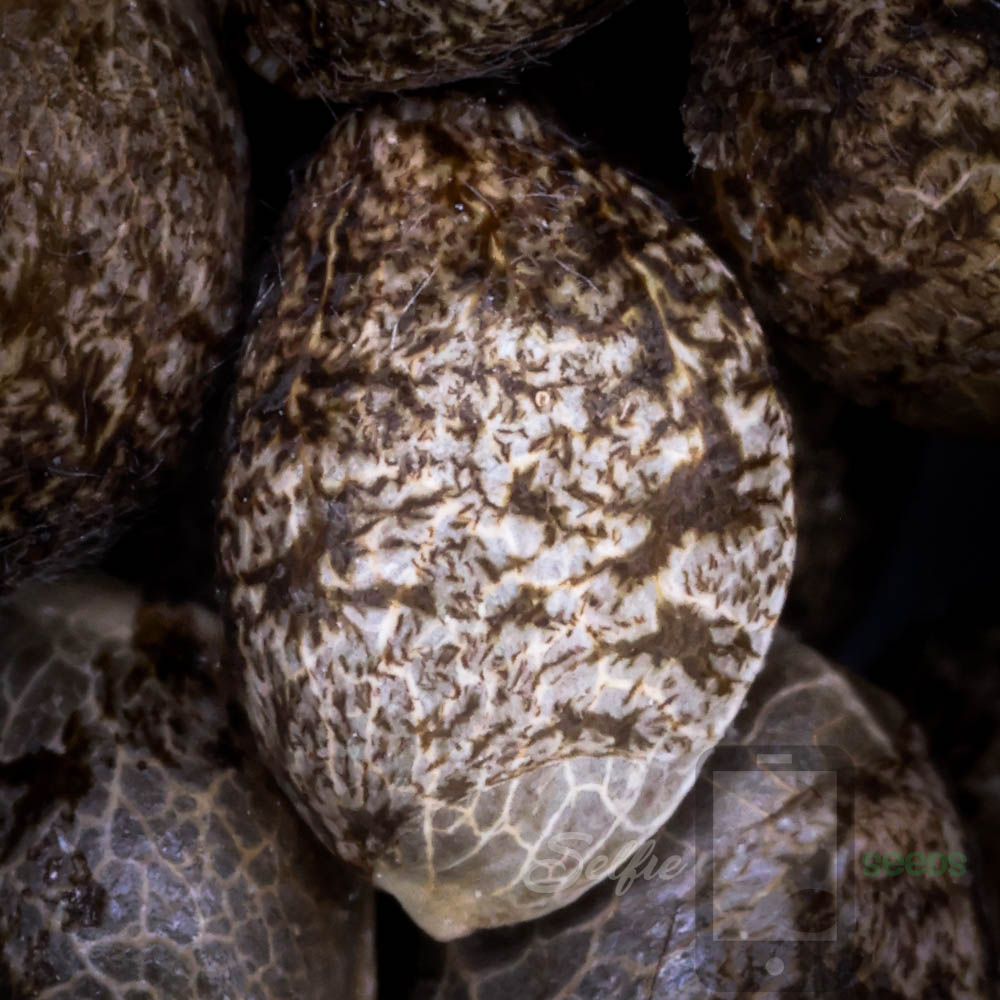
S1 cannabis seeds are seeds produced by selfing a selected cannabis plant: pollen from that plant is used to fertilize the same plant, or an identical clone of it. The practical appeal is straightforward: instead of preserving a favorite phenotype only as a living clone, a breeder can make feminized seed from that same genetic source.
That does not make an S1 seed a clone in seed form. A clone carries the parent’s genotype. An S1 seed is a new offspring created through self-fertilization, so inherited traits can still segregate. The useful buying question is therefore not just “Is it an S1?” but: Which individual plant was selfed, why was it selected, and what evidence does the breeder show?
What does S1 mean in cannabis seeds?
S1 means selfed generation one: the first seed generation made by self-pollinating a single genotype. In commercial feminized-seed work, this commonly involves inducing pollen-producing flowers on a genetically female plant, then using that pollen on the same plant or a clone of it. Because the starting material is female, the resulting seed population is expected to be female; in one published indoor study, selfed seed from female-genotype plants produced seedlings with a female genetic profile. [2]
“Feminized” and “S1” are related terms, but they are not interchangeable:
- S1: one selected genotype is both the pollen source and the seed parent.
- Feminized cross: pollen from one reversed female is used on a different female.
- Clone: a vegetative copy of the original plant—not a seed offspring.
| Starting material | What it preserves or combines | What to expect |
|---|---|---|
| Clone | The original genotype | The closest genetic match to the selected plant |
| S1 seed | One selected genotype through selfing | Female offspring with traits influenced by that parent, plus possible segregation |
| Feminized cross | Traits from two female parents | Female offspring with a broader set of parental combinations |
Will S1 cannabis seeds grow exactly like the mother plant?
No. An S1 population may be a more direct route back to a selected phenotype than an unrelated cross, but it cannot promise identical plants. Selfing increases the chance that allele pairs carried by the parent become homozygous in offspring. That can make some parent-associated traits easier to find, while also exposing recessive combinations that were not obvious in the original plant.
Our collection language describes a Selfie as the closest practical seed-based route to a documented mother plant, and that is the intended meaning: a focused genetic source, not a literal clone claim. [1] In our selection work, we care first about the actual plant—its resin, structure, aroma, yield, foliage and overall ease of growth—rather than relying on a strain name alone. The attached HWGrow Sweet Slurple journal records a specific breeding project and is linked as provenance for that kind of documented work. [3]
The scientific picture is more nuanced than the common marketing shorthand that S1 automatically means “stable.” A study of three cannabis cultivars found no measurable difference in its population-level genetic-diversity markers after one cycle of selfing versus cross-fertilization, while also noting that additional generations and plant-performance testing need study. [2] In other words, S1 describes the parentage and breeding step; it does not, by itself, quantify uniformity, quality, vigor or trait consistency.
What selfing can—and cannot—tell you about a phenotype
A well-documented S1 lets a grower evaluate a real source plant. If the breeder provides photos, grow notes, lineage and a clear statement that the plant was selfed, you can judge whether that parent’s visible and reported traits are worth pursuing.
What documentation cannot do is guarantee that every offspring will repeat every detail of the parent. Expression also depends on the individual seedling and growing environment. Treat parent photos and breeder notes as useful evidence of the selected plant—not a guarantee that every seed will deliver the same color, density, aroma, yield or growth pattern.
Why parent documentation matters more than the S1 label
When comparing S1 cannabis seeds, look for:
- The exact parent plant: not only a broad strain name.
- Clear lineage: confirmation that the pollen donor and seed receiver were the same genotype or identical clones.
- Selection rationale: why that individual was kept from the hunt.
- Observed grow evidence: plant photos, harvest notes, and where available, the journal or breeding record behind the release.
- Plain-language limits: a responsible breeder should not market seed offspring as identical clones.
That is the organizing principle of the True Selfies collection: connect selfed seed listings to the selected parent’s lineage, observations and breeding history so shoppers can assess the source plant rather than buy an acronym alone.
When S1 seeds make sense
- You are drawn to one documented plant: the mother phenotype is the reason you are buying the seed.
- You want feminized seed: selfing a female genotype is used to make female seed offspring. [2]
- You value provenance: you want to see the plant and understand why it was selected.
- You accept seed-to-seed variation: you are looking for a parent-focused population, not a guaranteed clone replacement.
When a cross may be the better choice
A cross is often more interesting when the goal is to combine two parents or explore combinations that neither parent showed alone. Browse crosses when you want that two-parent genetic direction; browse cannabis seeds when comparing the broader catalog.
The takeaway
S1 cannabis seeds are selfed, feminized offspring from one selected genotype—not clones. Their value is strongest when the breeder gives you a real parent plant to evaluate, explains why it was selected and is candid about variation. Look for documented provenance, not promises of genetic photocopies.
Further reading: HWGrow’s Sweet Slurple breeder’s grow journal.
Sources & References
Source hierarchy prioritizes documented HWGrow/EVYGrows/SelfieSeeds experience. External evidence is supplemental where useful, with counterarguments included when relevant.
- [HWGrow / Owner Source] True Selfies: S1 Cannabis Seeds
Selfie Seeds™ · Selfie Seeds™ · 2026
Quoted source: ““Shop S1 cannabis seeds produced by selfing documented selected plants.””
Supports / context: Defines the collection’s purpose and its emphasis on selected parent phenotypes, lineage, grow observations and breeding history. - [Peer-Reviewed Journal] Hermaphroditism in Marijuana (Cannabis sativa L.) Inflorescences – Impact on Floral Morphology, Seed Formation, Progeny Sex Ratios, and Genetic Variation
Zamir K. Punja and Julia E. Holmes · Frontiers in Plant Science · 2020
Quoted source: ““no measurable differences””
Supports / context: Supports the discussion of female-genotype progeny from selfed seed in the studied indoor setting and the important limitation that one selfing generation did not show lower population-level genetic diversity than the cross-fertilized comparison. - [Owner Journal / First-Hand Record] BREED to HARVEST – A Breeder’s Grow Journal – SWEET SLURPLE Selfie Seeds™
HowWeedGrow · HowWeedGrow · 2023
Quoted source: ““Raising the Standards of Quality””
Supports / context: Provides the attached owner-journal provenance for a documented Selfie Seeds™ breeding project; the publicly visible page identifies it as a Sweet Slurple breeding journal and tags it with breeding, feminized genetics, phenotype, pollen and seed.
Related seeds for sale
GxS (Double Grape x Sweet Slurry) x Stomped Berries · Space Juice x Sweet Slurry · Sweet Slurry x GUTSO · White Sativa Selfie Seeds™
Related Products


GxS (Double Grape x Sweet Slurry) x Stomped Berries
$60.00 Ex Tax: $60.00


Space Juice x Sweet Slurry
$50.00 Ex Tax: $50.00


Sweet Slurry x GUTSO
$50.00 Ex Tax: $50.00


White Sativa Selfie Seeds™
$75.00 Ex Tax: $75.00