
Japanese Strawberry Seeds: Seedlings, Selection and Runners
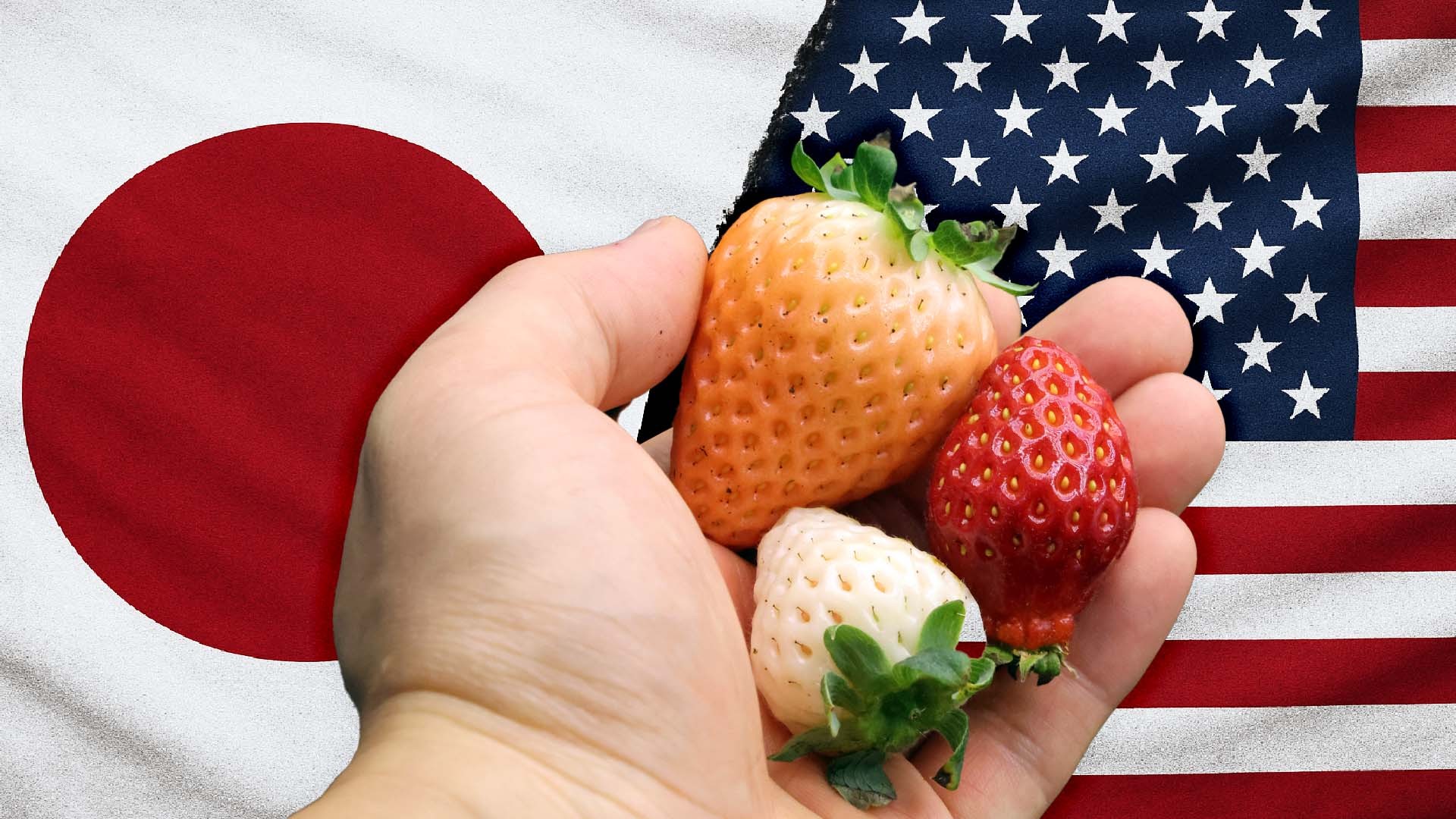
Japanese strawberry seeds are best approached as a seedling-selection project. The seed may come from a berry chosen for its pink, pale, deep-red, or aroma-led character, but the resulting plants are seedlings—not automatic copies of that fruit.
That is not a defect. It is the reason to grow them: sow a group, compare the plants, and keep the individual that earns its place in your garden. Garden strawberries generally do not breed true from seed, while runner plants are used for vegetative propagation of a selected plant. [1]
What a Japanese strawberry seed listing means
On this site, a listing name identifies the fruit source, selection, or seed-lot direction. It can help you choose a project by fruit color, eating character, or collector interest. It is not a promise that every seedling will match the named fruit in color, shape, sweetness, aroma, firmness, yield, runnering, or season.
A photograph documents the fruit source; it does not certify the phenotype of every seedling. If you need an exact named cultivar, buy a verified live plant. If you want to explore related seedling variation and select a keeper, seed is the appropriate format.
The important exception
Seed-grown strawberries are not always equally variable. Researchers can make deliberately inbred, documented seed lines that are more uniform. For example, a research line of the diploid woodland strawberry Fragaria vesca was selfed through multiple generations for that purpose. That is different from saving seed from a named garden-strawberry fruit: the latter should not be treated as a stable, true-to-type seed cultivar unless that status is specifically documented. [2]
Japanese strawberry seeds in our collection
The table describes the selection direction of each listing, not a guaranteed result from every seedling.
| Seed listing | Listed direction | Best fit for |
|---|---|---|
| Awayuki | Soft-pink fruit source | A blush-colored selection project. |
| Koyo | Red-fruit direction | A red-fruit seedling project rather than a novelty-color project. |
| Omakase | Pink-red, aroma-led direction | Growers willing to assess several seedlings for eating quality. |
| Kotoka | Deep-red direction | Selection within a darker-fruit population. |
| Benihoppe | Red-fruit direction | Red-fruit variation with room to select. |
| Pearl White | White-to-pale fruit source | A pale-fruit selection project; seedling variation remains normal. |
| Tochiotome / Kirameki | Red-fruit direction | Collectors interested in recognizable Japanese-strawberry naming and seedling selection. |
See the current Japanese strawberry seeds collection for available lots.
Grow seedlings first; preserve the keeper later
Label plants individually and evaluate the traits that matter in your conditions: vigor, flowering time, fruit color, aroma, flavor balance, texture, fruit size, yield, and runner production. A plant that looks promising in its first fruiting is worth watching again before you commit garden space to it.
When a seedling proves special, root its runners. That preserves that individual plant; it is the practical transition from exploration to repetition. In contrast, seed saved from that favorite seedling begins another round of sexual reproduction and another round of variation. [1]
Our germination observations
The following are Selfie Seeds™ handling and grow-room observations, not controlled-trial results or germination guarantees. Maturity, drying and storage history, genetics, and sowing conditions can all change the result.
- Sow more than one seed. We do not plan a strawberry grow around one seed because emergence can be uneven within a lot.
- Surface sow on a fine, pre-moistened medium. We press seed into contact with the surface rather than burying it deeply, which makes moisture and emergence easier to monitor.
- Keep the medium evenly damp, not waterlogged. Our aim is moisture with air still present in the medium—not a saturated tray.
- Provide strong light after emergence. We move sprouts promptly into adequate light for compact early growth.
- Delay separation until seedlings are established. We wait for meaningful true-leaf development before transplanting or separating crowded sprouts.
Does cold stratification help?
It can help, but it is not a universal rule or a guarantee. In a study of one deliberately inbred F. vesca line, moist seed chilled for three weeks germinated more quickly and uniformly than untreated seed under the study conditions. The authors wrote that “more uniform germination can be achieved by cold treatment of moist seed.” [2]
That result is useful context, not a fixed prescription for every Japanese strawberry seed lot. It involved a particular diploid line and controlled conditions, whereas these listings are seed lots from selected fruit. Our practical approach is stable moisture, patience, and any lot-specific directions supplied. If you want to test chilling, divide one lot into clearly labeled treatments rather than changing the treatment halfway through a tray.
A visual guide to extracting and starting strawberry seed
This HWGrow / Everything Grows video shows a practical method for extracting and sprouting seed from a strawberry. It is a visual seed-starting companion, not evidence that seed from a supermarket berry or named fruit will reproduce that cultivar exactly. [3]
Sources & References
Source hierarchy prioritizes documented HWGrow/EVYGrows/SelfieSeeds experience. External evidence is supplemental where useful, with counterarguments included when relevant.
- [Authoritative Source] Growing strawberries in your home garden
Oregon State University Extension Service · Oregon State University Extension Service · 2014
Quoted source: ““Strawberries do not breed true to type from seed.””
Supports / context: Garden strawberries generally do not reproduce true-to-type from seed, and runner daughter plants are used for vegetative propagation. - [Peer-Reviewed Journal] An inbred line of the diploid strawberry Fragaria vesca f. semperflorens for genomic and molecular genetic studies in the Rosaceae
Janet P. Slovin, Kyle Schmitt, and Kevin M. Folta · Plant Methods · 2009
Quoted source: ““More uniform germination can be achieved by cold treatment of moist seed.””
Supports / context: A specifically inbred diploid strawberry line showed more uniform germination after moist chilling; the article limits this evidence to context rather than treating it as a universal rule for all seed lots. - [Owner Video] FREE STRAWBERRY SEEDS - EASY How to Harvest and Sprout Supermarket Seeds Guide
Everything Grows / HWGrow · YouTube · Unknown
Supports / context: General visual guidance for extracting and starting strawberry seed; it does not establish cultivar identity or true-to-type seed reproduction.
Related seeds for sale
Omakase Oishii Pink Berry Japanese Strawberry Selfie Seeds™ · BERRY Pink Awayuki Japanese Strawberry Selfie Seeds™ · Nara Strawberry Lab Pearl White Selfie Seeds™ · BERRY Red Benihoppe Japanese Strawberry Selfie Seeds™
Related Products

Omakase Oishii Pink Berry Japanese Strawberry Selfie Seeds™
$15.00 Ex Tax: $15.00


BERRY Pink Awayuki Japanese Strawberry Selfie Seeds™
$30.00 Ex Tax: $30.00


Nara Strawberry Lab Pearl White Selfie Seeds™
$35.00 Ex Tax: $35.00

BERRY Red Benihoppe Japanese Strawberry Selfie Seeds™
$30.00 Ex Tax: $30.00