
Phenotype Hunting vs. S1 Seeds: When You Want Variety and When Y
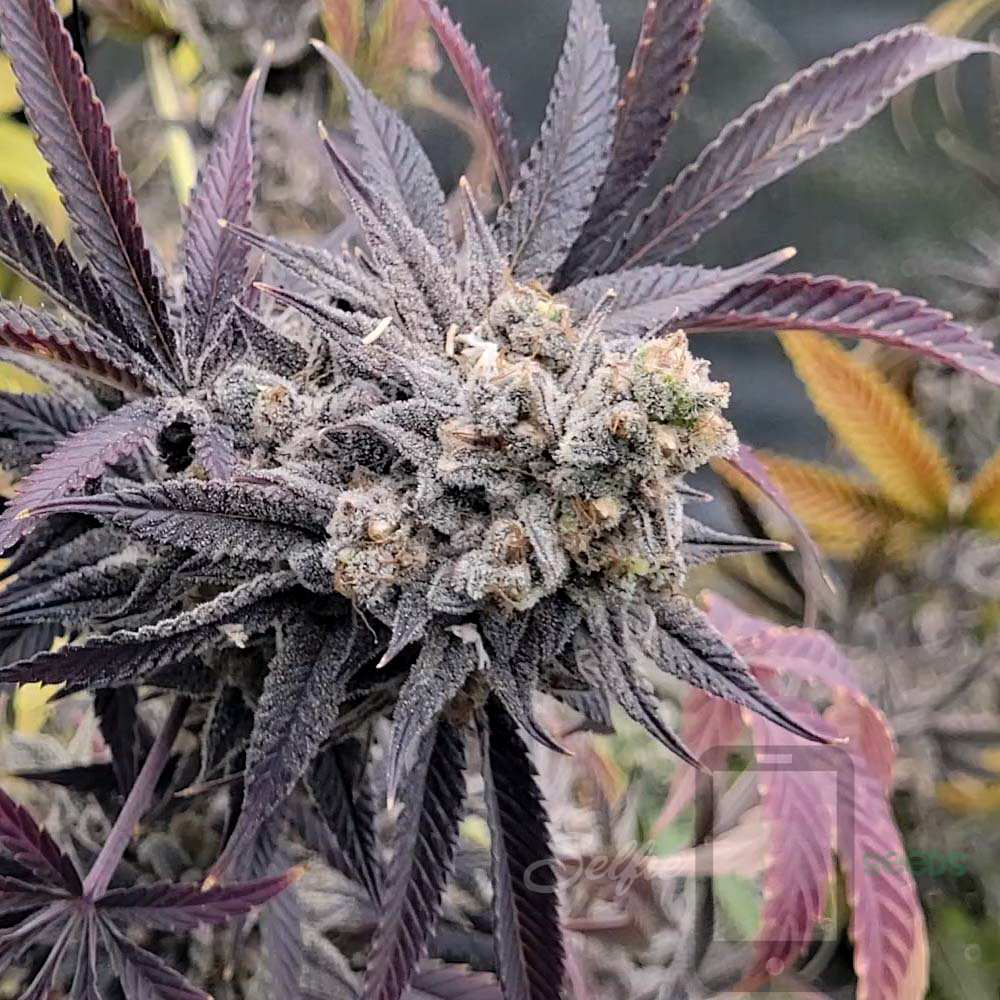
Phenotype hunting cannabis seeds and growing S1 seeds answer different questions. A phenotype hunt asks, “Which plant in this seed population is the keeper?” An S1 purchase asks, “Do I want seed offspring from this particular selected plant?”
Neither route guarantees a single outcome. A hunt gives you more plants to compare and more potential directions to discover. An S1 begins with a known parent, which can make the starting point more intentional, but S1 seeds are still sexually produced seed—not clones. Individual offspring can still separate for traits that were hidden in the parent.
What phenotype hunting actually means
A phenotype hunt is a selection project. Grow several seeds from the same cultivar, family, or cross under conditions that are as comparable as practical, then identify the individuals that best meet your goals. Those goals might include flower quality, resin coverage, yield, aroma, color, branching, flowering behavior, ease of training, or simply which plant you most enjoy.
Keep notes throughout the run. A plant that looks exceptional in late flower may have been slow to establish, difficult to support, unusually hungry, or prone to issues that matter in your space. Conversely, the easiest plant to grow may not be the one with the aroma or density you hoped to preserve.
Our documented strain hunts use this same selection mindset, while taking the broader step of comparing different seed lines. In one HWGrow run, eight strains were taken from seed to harvest; the grower ranked selections by resin/THC expression, yield, structure, foliage, and ease of growing, while also recognizing that the personally preferred plant was not necessarily the overall winner. That is an owner preference and a documented grow observation—not a universal ranking system. [1]
Strain hunting and phenotype hunting are related, but not identical
The terms are often used interchangeably, but the scale differs:
- Phenotype hunt: compare multiple seeds within one named cultivar, family, or cross to find the best individual expression.
- Strain hunt: compare plants from different cultivars or breeders to decide which line is worth pursuing further.
A strain hunt can lead into a phenotype hunt. Once a line earns a place in the garden, running more seeds from that family can help determine whether there is a repeatable keeper worth cloning or breeding with.
What an S1 changes
S1 means first selfed generation. In practical cannabis breeding, a selected female is induced to make pollen, and that pollen is applied to the same plant or to a genetically identical clone. The resulting seed is feminized because both genetic contributors are female, but feminized seed is not automatically S1: reversed pollen can also be used on a different female to create a feminized cross.
The appeal is provenance. Instead of choosing only by a strain name, you can choose seed because the actual mother plant was selected and documented for traits you care about. In the HWGrow selection journal, the winning female was cloned, retained as a mother, and one clone was reversed to pollinate itself and other plants. [2]
That does not make every S1 offspring a genetic photocopy. Selfing increases homozygosity and can reveal recessive combinations. Environment also affects the final expression of many traits. A clone is the route for retaining the exact genotype; an S1 is seed made from that genotype.
Does an S1 always give more consistency?
It can be a more focused starting point, but it is not a promise of uniform plants. The answer depends heavily on the parent’s underlying heterozygosity and on the trait being evaluated.
There is evidence pointing in both directions. A 2025 study found less variation in seed shape among self-pollinated cannabis seed than among the compared seed types. That finding is limited to seed morphology; it should not be used as proof that every plant trait or finished flower trait will be uniform. [3] In contrast, a 2025 hemp S1 study found extensive variation in growth, development, and reproductive traits among offspring from one self-pollinated parent. [4]
For a grower, the practical takeaway is simple: buy an S1 for access to a selected, documented genetic source—not because you expect every seed to reproduce the mother exactly. The more transparent the breeder is about the source plant and its selection history, the better you can judge whether that source is worth growing.
Choose phenotype hunting cannabis seeds when...
- You enjoy comparing plants and have enough space, time, and plant count for a real selection run.
- You want the possibility of finding an unusual expression of aroma, color, resin, structure, or vigor.
- You are willing to keep clones or detailed notes so a true keeper is not lost at harvest.
- You accept that different plants may require different support, feeding, training, or harvest timing.
A hunt is especially worthwhile when the discovery process is the point. You are not just buying a label; you are looking for an individual plant that earns a long-term place in your garden.
Choose S1 seed when...
- You specifically like the documented mother phenotype and want offspring from that source.
- You have a smaller garden and would rather begin with a defined parent than a broad exploration project.
- You value a clear record of why the source plant was selected: its resin, structure, aroma, yield, color, or grow behavior.
- You understand that you may still need to select among the offspring if you want the closest match for your own room and preferences.
For a deeper explanation of what selfing can and cannot preserve, see S1 Cannabis Seeds Explained: What Selfing Does to a Phenotype.
A practical decision rule
| If your main goal is... | Start with... |
|---|---|
| Finding a surprise keeper | Phenotype hunting cannabis seeds |
| Trying several unrelated lines to find your next direction | A strain hunt |
| Growing offspring from one plant you already admire | An S1 |
| Keeping the exact plant with the least genetic change | A clone of the selected plant |
Browse by your goal
Explore Cannabis Seeds when you want to compare the available options. Browse True Selfies when the appeal is a documented, selfed parent plant. Explore Crosses when you want two selected parents and more room for new combinations.
Bottom line: hunt when you want variation to evaluate; choose an S1 when the parent plant itself is the reason you are buying the seed. In either case, select with your own garden, priorities, and observations in mind.
Sources & References
Source hierarchy prioritizes documented HWGrow/EVYGrows/SelfieSeeds experience. External evidence is supplemental where useful, with counterarguments included when relevant.
- [Owner Journal / First-Hand Record] Best Strain I Ever Grew – Strain Hunt 2022 – 7 Weed Strains Seed to Harvest
HWGrow · HowWeedGrow · 2022
Supports / context: Documented owner strain-hunt experience: eight strains grown from seed to harvest and the grower's stated selection priorities of resin/THC, yield, structure, foliage, and ease of growing. - [Owner Journal / First-Hand Record] Strain Hunt Winner – Highest THC and Yield
HWGrow · HowWeedGrow
Supports / context: Documents the selected female being cloned, retained as a mother, and one clone being reversed to pollinate itself and other plants. - [Peer-Reviewed Journal] Self-pollinated cannabis seeds lead to less variation in shape: a technological approach of potential commercial interest
Francisco Fernandez Torne, Yanina L. Idaszkin, Gregorio Bigatti, Pablo Navarro, Rolando González-José, Federico Márquez · BMC Plant Biology · 2025
Quoted source: ““These seeds exhibit the least morphological variation.””
Supports / context: Supports the limited point that the study observed lower variation in seed shape among self-pollinated seed; it does not establish uniformity in whole-plant or flower traits. - [Peer-Reviewed Journal] Genome-specific association study (GSAS) for exploration of variability in hemp (Cannabis sativa)
Nina Trubanová, Sachiko Isobe, Kenta Shirasawa, Akiko Watanabe, George Kelesidis, Rainer Melzer, Susanne Schilling · Scientific Reports · 2025
Quoted source: ““The S1 population shows extensive variability in plant growth, development, and reproductive patterns.””
Supports / context: Provides the counterpoint that an S1 population from a highly heterozygous Cannabis parent can still show substantial variation in plant traits.
Related seeds for sale
Selfie Seeds™ Salvage/Eternity/Genetic Purification Service · Sugar Cane Selfie Seeds™ - Strain 4our · Sour Diesel Selfie Seeds™ · White Sativa Selfie Seeds™
Related Products


Selfie Seeds™ Salvage/Eternity/Genetic Purification Service
$3,000.00 Ex Tax: $3,000.00


Sugar Cane Selfie Seeds™ - Strain 4our
$50.00 Ex Tax: $50.00
Sour Diesel Selfie Seeds™
$60.00 Ex Tax: $60.00


White Sativa Selfie Seeds™
$75.00 Ex Tax: $75.00